
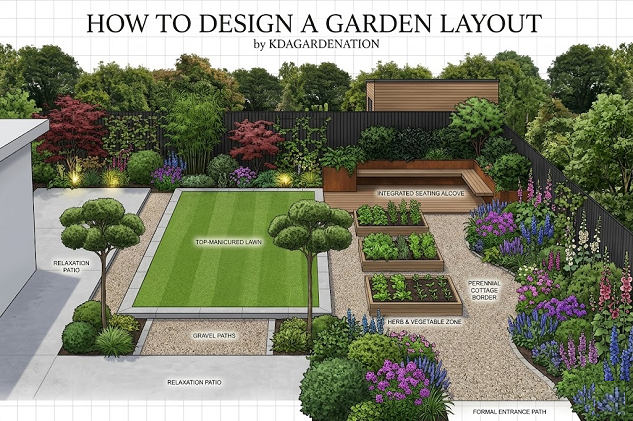
Garden designing is not simply about planting trees and flowers; it is about making an outdoor eco-system that is not only aesthetic but sustainable too. If you are on the hunt for information on how to design a garden layout Kdagardenation, you must be looking for a comprehensive approach to create a beautiful and functional garden.
The following years, 2026, are bound to be impacted by landscaping practices, eco-gardening, efficient irrigation, and space utilization. Be it small backyards, rooftops or vast spaces of open land; the proper garden layouts will ensure that there is complete change in your surroundings.
All information related to garden designing is available here, from planning till maintenance, garden layout ideas, plants to choose, modern trends, and expert advice. You also get a free garden layout chart.
Understanding How to Design a Garden Layout Kdagardenation
Learning the art of designing a garden layout for Kdagardenation requires one to be able to effectively organize outdoor spaces for balance and functionality. This requires assessment of factors such as soil type, sunlight availability, and space then arranging plants and other structures in the right manner. Good design leads to improved plant growth among others.
A well-planned garden layout helps you:
- Improve plant growth conditions
- Enhance outdoor aesthetics
- Reduce maintenance effort
- Increase property value
- Create a relaxing environment
Step-by-Step Process to Design a Garden Layout Kdagardenation
A step by step procedure to develop the Garden layout Kdagardenation requires that an individual starts off by evaluating the space, sunlight, and the soils. The individual then identifies the purpose of the garden, develops its layout, selects appropriate plants for the garden, and develops a plan for paths and construction.
1: Study Your Garden Space
- Total land size
- Sunlight exposure areas
- Shade zones
- Soil type
- Water drainage pattern
2: Define Garden Purpose
- Relaxation garden
- Flower garden
- Vegetable garden
- Mixed-use garden
- Decorative landscape
3: Create a Layout Sketch
- Plant zones
- Walking paths
- Seating areas
- Water features
- Decorative sections
4: Select Plants Strategically
- Climate suitability
- Growth height
- Maintenance level
- Seasonal variety
5: Plan Hardscape Elements
- Pathways
- Garden benches
- Fountains
- Pergolas
- Stone structures
Garden Layout Planning Table (Kdagardenation Design System)
| Garden Zone | Purpose | Recommended Elements | Plant Type | Maintenance Level |
|---|---|---|---|---|
| Entrance Zone | First impression area | Decorative stones, flower borders | Seasonal flowers | Medium |
| Central Lawn | Open space & relaxation | Grass carpet, seating area | Lawn grass | Low |
| Flower Bed Zone | Visual beauty | Colorful borders, edging stones | Roses, marigold, lilies | Medium |
| Vegetable Area | Food production | Raised beds, irrigation system | Tomatoes, spinach, chili | High |
| Shade Area | Cooling & resting | Benches, pergola | Ferns, shade plants | Low |
| Water Feature Zone | Aesthetic focus | Fountain, pond | Aquatic plants | Medium |
| Pathways | Movement access | Stone, gravel paths | Border plants | Low |
Modern Garden Design Principles (2026 Trends)
The contemporary principles of designing gardens include sustainability, minimalism, and landscaping innovation. Eco-materials, native plants, and water-saving irrigation system are used today to make gardens more sustainable. Vertical gardening, compact gardens, and multifunctional spaces are among the new tendencies that have started to be implemented even in small and large gardens. The automation of garden irrigation and solar-powered lighting are used to make gardens more functional. The balance of nature, clarity of composition, and harmony of hard structures and vegetation become priorities for designers as well.
- Minimalist design approach
- Eco-friendly materials
- Smart irrigation systems
- Vertical gardening
- Space optimization
- Low-water plant selection
The reason why garden layout is important is because it creates balance and functionality in the outdoor area. The garden layout design will help improve plant health in terms of sunlight exposure, spacing, and the use of soils. Irrigation planning makes it easy to reduce maintenance work and the wastage of water. This is also important in improving aesthetics, property appeal, and gardening sustainability. Garden layouts make it easier to create separation between functional areas such as sitting, planting, and pathways.
- Improves visual appeal
- Enhances plant health
- Reduces water usage
- Saves maintenance time
- Creates functional outdoor space
- Supports eco-friendly living
Plant Selection Guide for Kdagardenation Layout
Kdagardening plants selection guide focuses on plant selection depending on climate, soil condition, and the amount of sunshine available. This entails blending of flowers, shrubs, trees, herbs, and vegetables. Selection of indigenous and easy to maintain plants guarantees healthy plants, seasonality, sustainability, and reduced maintenance of an attractive garden design.
Recommended Plant Categories:
- Flowering plants
- Shrubs
- Trees
- Herbs
- Vegetables
- Ground cover plants
Plant Selection Table
| Plant Type | Examples | Best Location | Benefit |
|---|---|---|---|
| Flowering Plants | Rose, Marigold | Flower beds | Visual beauty |
| Herbs | Mint, Basil | Kitchen garden | Cooking use |
| Trees | Mango, Neem | Boundary areas | Shade & oxygen |
| Shrubs | Hibiscus, Jasmine | Borders | Decoration |
| Vegetables | Tomato, Spinach | Garden beds | Food supply |
| Grass | Bermuda grass | Lawn area | Soft surface |
Pathway and Structure Design Tips
Kdagarden pathway and structure designing includes the creation of functional and aesthetically pleasing movement spaces in the garden. The use of materials such as stones, gravel, or bricks is recommended for better design and functionality. The pathways should be wide and smoothly connected to ensure easy movement. Other structures that can be included include pergolas, benches, and arches among others. Proper placement with regard to the plants’ zones should be considered for better design. The inclusion of proper lighting will make the design more appealing.
Best materials:
- Stone tiles
- Gravel paths
- Brick walkways
Structures to include:
- Pergolas
- Wooden benches
- Shade shelters
- Decorative arches
Irrigation and Water Management System
Watering and irrigation systems in Kdagardenation emphasize water efficiency that will keep plants healthy. This is done through various techniques such as drip irrigation, sprinkling, and hand watering, depending on the size of the garden and the type of plants grown. The right scheduling will ensure that the plants get enough water without wastage. Rainwater harvesting could also be used for sustainability purposes and cost reduction. Effective drainage systems prevent water logging and any damage to roots.
- Drip irrigation
- Sprinkler systems
- Manual watering
- Rainwater harvesting
Common Mistakes in Garden Layout Design
Typical errors made in garden design Kdagardenation are overcrowding of plants, disregarding directions of sunlight, and inadequate soil preparation. Another typical mistake that many gardeners make is not considering drainage plans; this results in excessive water accumulation and damage to plants. Planting plants that do not match climatic conditions will minimize the chances of growth. Not creating clear paths and zoning makes a garden appear untidy and less manageable. Using too much ornamentation can make a garden less efficient in space utilization.
Avoid these errors:
- Overcrowding plants
- Poor sunlight planning
- Ignoring soil type
- No drainage system
- Wrong plant selection
Maintenance Strategy for Long-Term Garden Health
Maintenance approach for ensuring long-term garden health Kdagardenation relies on maintenance techniques that aim at ensuring plants’ healthiness and attractiveness. The technique involves regular watering, pruning, and fertilizing. The watering should be done depending on the type of plant and its requirements while pruning will ensure growth. Fertilizing will ensure improved soil quality. Pests and weed control will play an important role in avoiding any negative effects on plants. Mulching will help maintain soil aeration and moisture retention. Inspection of plants regularly will help identify disease.
Tasks include:
- Regular pruning
- Soil fertilization
- Pest control
- Watering schedule
- Seasonal replanting
FAQs – How to Design a Garden Layout Kdagardenation
What is the first step in garden layout design?
Start by analyzing space, sunlight, soil, and drainage conditions.
Can small spaces use this garden design method?
Yes, it works for both small and large garden areas effectively.
What is the best low-maintenance garden style?
Minimalist gardens with native plants and drip irrigation systems.
How important is planning in garden design?
Planning is essential for structure, plant health, and long-term success.
Can I mix vegetables and flowers in one garden?
Yes, mixed gardens improve both beauty and productivity.
Conclusion
Learning how to design a garden layout kdagardenation teaches you how to convert any outside area into a productive, lovely, and environmentally friendly garden. Through good planning, structure of design, selection of plants, and sustainability measures, you can create a garden that will last you many years.
No matter whether you are an amateur or professional gardener, a systematic approach is always better.
