
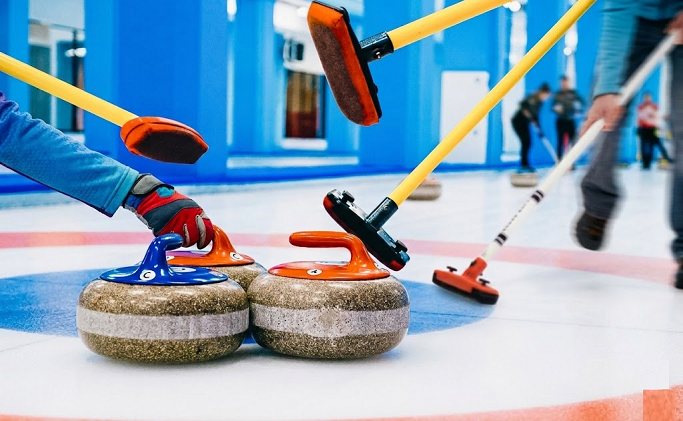
Curling is one of the most fascinating sports in the Winter Olympics. At first glance, it looks simple: athletes slide a heavy granite stone across ice while teammates sweep rapidly in front of it. But behind this seemingly simple action lies a deep combination of physics, precision engineering, and elite-level strategy. One of the most frequently asked questions by viewers is: how do brooms affect the stone’s path in Olympic curling?
The short answer is that sweeping changes the condition of the ice in real time. But the real explanation goes much deeper. Sweeping affects friction, temperature, ice structure, stone speed, travel distance, and even the curve of the stone.
At the highest level of competition such as the Winter Olympics Curling, sweeping is not just support—it is a performance-shaping skill that can determine victory or defeat.
In this complete guide, we will break down everything you need to know about curling brooms, the science behind sweeping, and how it dramatically influences the stone’s path.
Understanding Curling: The Foundation of the Game
What Is Curling?
Curling is a precision ice sport where two teams take turns sliding heavy granite stones toward a circular target area called the “house.”
The objective is simple:
- Get your stones closer to the center than your opponent
- Block or knock away opposing stones
- Strategically control the playing field
Despite its slow appearance, curling is often described as “chess on ice” due to its deep tactical nature.
Key Elements of Curling
Before understanding sweeping, it’s important to know the core components:
- Curling stones (granite rocks weighing ~20 kg)
- Ice sheet (carefully prepared pebbled surface)
- Sweeping brushes (modern synthetic brooms)
- Team communication system
- Strategic shot planning
Each of these elements works together, but sweeping is the most dynamic and responsive part of gameplay.
How Do Brooms Affect the Stone’s Path in Olympic Curling?
The Core Mechanism Explained
So, how do brooms affect the stone’s path in Olympic curling?
Sweeping changes the physical condition of the ice directly in front of the moving stone. When players sweep, they create heat through friction, which slightly melts the ice surface and creates a thin layer of water.
This leads to:
- Reduced friction
- Smoother sliding surface
- Increased travel distance
- Delayed curling (curve)
- Improved directional control
In simple terms, sweeping allows players to control how the stone behaves after it is released.
The Science Behind Curling Sweeping
Ice Is Not Smooth — It Is Engineered
Curling ice is not flat like a hockey rink. Instead, it is “pebbled,” meaning tiny water droplets are sprayed and frozen to create a textured surface.
This texture:
- Reduces surface contact
- Allows controlled sliding
- Enables predictable curling behavior
Without sweeping, the stone interacts heavily with these ice bumps, slowing it down and increasing curl unpredictability.
Friction: The Key Force in Curling
Friction is the resistance that slows the stone down.
Sweeping reduces friction in three main ways:
- Melting microscopic ice peaks
- Creating a lubricating water film
- Smoothing irregular ice texture temporarily
The result is a faster and more controlled stone path.
Boundary Lubrication Effect
A major scientific concept in curling is boundary lubrication.
When sweeping occurs:
- Ice surface warms slightly
- A micro-thin water layer forms
- The stone “floats” more efficiently
- Friction decreases significantly
This is why sweeping is so powerful—it literally changes how the stone interacts with the ice surface.
How Sweeping Changes the Stone’s Path
1. Increasing Travel Distance
Sweeping allows the stone to maintain momentum longer.
Without sweeping:
- Stone slows quickly
- Stops earlier than intended
With sweeping:
- Reduced resistance
- Longer travel distance
- More control over final position
2. Controlling the Curl (Curve)
Curling stones naturally curve due to rotation and ice friction differences.
Sweeping helps:
- Delay the curl effect
- Straighten the trajectory
- Adjust final angle of movement
This is crucial for precision shots.
3. Improving Speed Control
Sweepers can dynamically adjust stone speed:
- Increase speed for longer shots
- Maintain momentum for mid-range shots
- Reduce excessive curl impact
4. Fine-Tuning Final Placement
In elite curling, the difference between winning and losing can be millimeters.
Sweeping helps players:
- Stop stones at exact positions
- Avoid collisions
- Execute strategic placements
Types of Curling Brooms and Technology
Traditional vs Modern Equipment
| Type | Material | Efficiency | Usage |
|---|---|---|---|
| Straw Broom | Natural fibers | Low | Historical use |
| Synthetic Brush | Advanced materials | High | Modern competition |
Why Modern Curling Brushes Dominate
Modern brooms are designed for performance:
- Generate more heat quickly
- Improve friction control
- Reduce fatigue for athletes
- Provide consistent sweeping results
Sweeping Techniques Used by Professionals
Rapid Sweeping Technique
Fast motion sweeping generates maximum heat and friction reduction in short time.
Used when:
- Stone needs extra distance
- Critical shot extension is required
Controlled Precision Sweeping
Slow, targeted sweeping helps fine-tune direction and curl behavior.
Used when:
- Stone is close to target
- Precision matters more than speed
Coordinated Dual Sweeping
Two sweepers work together to maximize impact.
Benefits include:
- More consistent ice modification
- Balanced pressure application
- Greater control over stone path
Strategy Behind Sweeping Decisions
Sweeping Is Real-Time Decision Making
Sweeping is not automatic—it is constantly adjusted based on:
- Ice conditions
- Stone speed
- Desired trajectory
- Opponent positioning
Communication in Curling Teams
Teams rely on constant communication:
- “Hard sweep!”
- “Off!”
- “Line is good!”
- “Keep going!”
Every call affects the final result.
Ice Conditions and Their Impact
Why Ice Conditions Matter So Much
Even small changes in temperature or humidity affect performance.
| Condition | Effect |
|---|---|
| Cold ice | More friction, less distance |
| Warm ice | Less friction, more glide |
| Fresh pebble | More curl potential |
| Swept surface | Reduced curl and smoother motion |
Full Summary Table: Sweeping Effects
| Factor | What Sweeping Does | Result on Stone |
|---|---|---|
| Friction | Reduces it | Faster movement |
| Ice Surface | Smooths micro bumps | Longer glide |
| Heat | Slight increase | Thin water layer |
| Speed | Maintains/increases | Better control |
| Curling Path | Delays curve | Straighter line |
| Accuracy | Improves precision | Better scoring |
Why Sweeping Can Decide Olympic Matches
In competitions like the Winter Olympics Curling, sweeping is often the difference between winning gold and losing early.
A single sweeping decision can:
- Extend a shot by several meters
- Save a missed throw
- Change stone positioning by millimeters
- Influence final rankings
At the elite level, sweeping is just as important as throwing the stone.
Common Misunderstandings About Curling Brooms
“Sweeping is just cleaning the ice”
Incorrect. Sweeping actively changes ice physics.
“It only makes the stone faster”
False. It also controls direction and curling behavior.
“It has no scientific impact”
Wrong. Sweeping directly modifies friction, heat, and ice structure.
Frequently Asked Questions (FAQ)
How do brooms affect the stone’s path in Olympic curling?
They reduce friction, increase speed, and control how much the stone curls by modifying the ice surface in real time.
Why is sweeping so important in curling?
Because it allows players to control speed, distance, and direction with precision during a moving shot.
Does sweeping make the stone go straighter?
Yes, sweeping delays the curling effect, helping the stone travel in a straighter line for longer.
Can sweeping change the outcome of a match?
Absolutely. In elite curling, sweeping often determines scoring outcomes and match results.
Is curling ice different from normal ice?
Yes, it is specially pebbled and maintained to allow controlled friction and predictable movement.
Conclusion
Understanding how do brooms affect the stone’s path in Olympic curling reveals that curling is far more than a simple sliding game. It is a highly technical sport where physics, strategy, and teamwork combine in real time.
Sweeping changes friction, controls speed, adjusts curl behavior, and allows athletes to fine-tune stone placement with incredible precision. At the Olympic level, these small adjustments can decide championships.
Curling is a sport where every movement matters—and sweeping is one of the most powerful tools in the game.
If you want to understand elite sports better, curling is a perfect example of how science and strategy work together at the highest level.
Explore more Olympic sports science guides to uncover the hidden physics behind world-class athletic performance.
