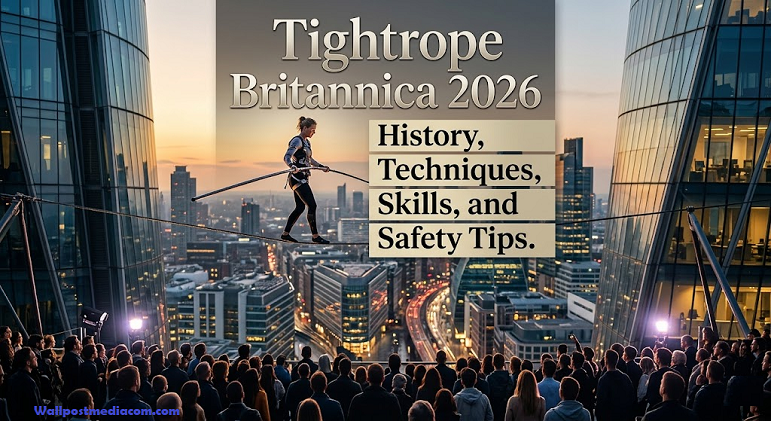
Tightrope Britannica 2026: History, Techniques, Skills, and Safety Tips
Tightrope walking is a remarkable blend of art and athletic skill. It demands balance, patience, and strong mental focus. The concept of Tightrope Britannica relates to structured knowledge from Encyclopaedia Britannica. This reference helps explain the origins, techniques, and cultural value of tightrope walking.
Performers walk on a narrow rope or wire suspended above the ground. The height can vary from a few feet to extreme elevations. Each step requires careful control of body weight. Even small movements can affect balance significantly.
Tightrope walking has fascinated audiences for centuries. It appears in circuses, festivals, and modern Entertainment shows. The art form represents discipline and courage. Many performers dedicate years to mastering this skill.
- Tightrope walking combines art and physical skill
- It requires balance, focus, and training
- Used in entertainment and cultural events
- Often performed at varying heights
- Demands strong mental discipline
Historical Origins and Early Development
The history of tightrope walking spans many cultures and centuries. Early records show performances in ancient China and Greece. These acts were part of festivals and public entertainment. The Tightrope Britannica approach explains these origins in detail.
The performers were known as tightrope walkers and would perform at fairs or markets in medieval Europe. The people watching loved their risky feats, which kept improving. In order to get the attention of the crowd, the performers used props and costumes.
Renaissance was the era when artistry in tightrope walking was recognized. Tightrope walkers started working on their own styles.
- Originated in ancient civilizations
- Popular in medieval European fairs
- Evolved during the Renaissance
- Became more artistic and complex
- Spread across different cultures
Types of Tightrope Walking
| Type | Description | Difficulty |
| Low-wire | Close to ground | Easy |
| High-wire | Performed at heights | Hard |
| Slackline | Looser rope | Medium |
| Freestyle | Includes tricks | Hard |
Evolution of Tightrope Techniques
Techniques in tightrope walking have improved significantly over time. Early performers relied on basic balancing skills. Modern performers use advanced methods and equipment. The Tightrope Britannica perspective highlights this evolution.
Steel cables were introduced, which made things more stable. The balancing poles used became longer and more efficient. People began to master the technique of centering their body weight. All these led to more complicated acrobatic performances.
In today’s circus, people perform acrobatic stunts on tightrope wires. They have even begun to cover long distances while performing at great heights.
- Improved equipment increased safety
- Balancing techniques became advanced
- High-wire acts became popular
- Performers attempt longer distances
- Modern acts include creative tricks
Equipment Overview
| Equipment | Purpose | Importance |
| Rope/Cable | Walking surface | High |
| Pole | Balance support | High |
| Shoes | Grip and control | Medium |
| Safety Net | Injury prevention | High |
Equipment Used in Tightrope Walking
The rope or wire must be strong and tightly stretched. This reduces movement and improves balance. Pole balancing is widely used in performances.
It assists in spreading weight evenly. Special shoes are used to aid in maintaining balance. There are performers who prefer walking barefoot for feeling. Safety devices are equally necessary, particularly when training. Harnesses and nets ensure safety. Tightrope Britannica focuses on using appropriate equipment.
- Strong rope or cable is essential
- Balancing poles improve stability
- Specialized shoes enhance grip
- Safety nets protect performers
- Equipment must be regularly checked
Skills Required
| Skill | Description | Level |
| Balance | Stability control | High |
| Focus | Avoid distractions | High |
| Strength | Support body movement | Medium |
| Coordination | Smooth motion | High |
Skills Required for Tightrope Walking
Tightrope walking requires a combination of physical and mental skills. Balance is the most important ability. Performers must control their center of gravity carefully.
Concentration and focus are of equal significance. Distractions might cause errors. Power and coordination help execute the moves flawlessly. The Tightrope Britannica technique emphasizes the importance of learning the skill systematically. Practice is critical in honing these skills. Practitioners practice daily to develop their skills.
- Strong balance is essential
- Focus and concentration are critical
- Physical strength supports performance
- Coordination ensures smooth movement
- Regular practice improves skills
Types of Tightrope Performances
There exist different types of tightrope acts. Low wire acts are done near the ground level. They can be considered as training activities. High wire acts are done from elevated heights. One of the current variations includes slackline act. It involves a loosely tied rope, thus making it challenging. Freestyle tightrope acts involve doing tricks and acrobatics.
- Low-wire is for beginners
- High-wire involves great heights
- Slacklining increases difficulty
- Freestyle adds creativity
- Each type requires different skills
Safety Measures and Precautions
Safety is a major concern in tightrope walking. Performers must follow strict precautions. Training usually starts at low heights. This reduces the risk of injury. Safety nets and harnesses are commonly used. Equipment must be inspected before each performance. Weather conditions also affect safety.
Strong winds can make balancing difficult. The Tightrope Britannica perspective stresses the importance of preparation. Proper planning ensures safer performances.
- Begin training at low heights
- Use safety nets and harnesses
- Inspect equipment regularly
- Avoid performing in strong winds
- Follow professional guidelines
Famous Tightrope Walkers
Many tightrope walkers have gained worldwide recognition. Philippe Petit is one of the most famous performers. He walked between the Twin Towers in 1974. This act became legendary. Other performers have also pushed the limits of this art. They attempt daring feats at extreme heights. The Tightrope Britannica references often highlight such individuals.
- Philippe Petit performed iconic acts
- Famous performers inspire others
- High-risk acts attract attention
- Recognition comes with skill
- Performers push boundaries
Cultural Importance of Tightrope Walking
Tightrope walking has cultural significance worldwide. It appears in festivals and traditional events. In some cultures, it symbolizes balance and harmony. The Tightrope Britannica concept explains its role in cultural expression. Performers often reflect local traditions in their acts. This connects audiences with their heritage.
- Part of cultural traditions
- Symbolizes balance and harmony
- Used in festivals and events
- Reflects local heritage
- Connects communities
Psychological Aspects of Performance
Mental strength is crucial for tightrope walking. Fear is a natural challenge. Performers must learn to control it. Confidence grows with experience and training. Visualization techniques help improve focus. The Tightrope Britannica approach highlights mental preparation. Staying calm under pressure is essential. Even experienced performers rely on mental discipline.
- Control fear and anxiety
- Build confidence through practice
- Use visualization techniques
- Maintain focus
- Develop mental resilience
Training Methods and Practice Routines
Training for tightrope walking requires dedication. Beginners start with basic balance exercises. Low ropes are used for initial practice. As skills improve, performers move to higher ropes. Strength and flexibility exercises are included. The Tightrope Britannica method emphasizes gradual progression. Consistent practice is key to success. Performers must refine their techniques regularly.
- Start with basic exercises
- Practice on low ropes
- Gradually increase difficulty
- Include strength training
- Maintain consistency
Tightrope Walking in Modern Entertainment
Tightrope walking remains popular in modern entertainment. It appears in circuses, talent shows, and public events. Technology has enhanced performances.
Lighting and sound effects create dramatic experiences. The Tightrope Britannica perspective shows how tradition meets innovation.
Modern audiences continue to admire this art form. It combines risk and beauty.
- Featured in modern shows
- Enhanced by technology
- Attracts large audiences
- Combines tradition and innovation
- Continues to evolve
Frequently Asked Questions (FAQ) About Tightrope Britannica
What is meant by tightrope britannica?
The term Tightrope Britannica refers to structured information about tightrope walking. It is often associated with explanations from Encyclopaedia Britannica. This includes history, techniques, and cultural significance. It helps readers understand tightrope walking in a clear and organized way.
How difficult is tightrope walking for beginners?
Tightrope walking is challenging for beginners. Balance and coordination take time to develop. Most learners start with low ropes and safety equipment. With regular practice, skills improve gradually. The Tightrope Britannica approach suggests step-by-step training.
What equipment is required for tightrope walking?
Basic equipment includes a strong rope or cable. A balancing pole is also important. Shoes with good grip can help maintain stability. Safety nets and harnesses are used during training. Proper equipment ensures safer practice and performance.
Who is the most famous tightrope walker?
One of the most famous performers is Philippe Petit. He became famous for walking between the Twin Towers in 1974. His performance remains one of the most iconic acts. Many other performers have also achieved recognition worldwide.
Is tightrope walking dangerous?
Yes, tightrope walking can be dangerous. The level of risk depends on height and conditions. Safety measures reduce the chances of accidents. Beginners use nets and harnesses for protection. Professionals rely on experience and careful preparation.
How long does it take to learn tightrope walking?
Learning time varies for each person. Basic skills can take weeks to develop. Advanced techniques may require years of practice. Consistency and proper training are essential. The Tightrope Britannica method emphasizes gradual improvement.
What skills are most important for tightrope walking?
Balance is the most important skill. Focus and concentration are also essential. Physical strength supports movement and stability. Coordination helps maintain smooth steps. Mental control is equally important for success.
Where is tightrope walking commonly performed?
Tightrope walking is performed in circuses and festivals. It also appears in street performances and talent shows. Some performers attempt high-wire acts between buildings. The art form is popular worldwide.
What is the difference between tightrope and slackline?
A tightrope is stretched tightly for stability. A slackline is looser and moves more. Slacklining requires different balancing techniques. It is often used for practice and modern performances. Both forms require strong focus and control.
Why is tightrope walking culturally important?
Tightrope walking is part of many cultural traditions. It symbolizes balance, courage, and discipline. Performances often reflect local customs and artistry. The Tightrope Britannica perspective highlights its cultural value. It connects audiences with history and creativity.
Final Thoughts
Tightrope Britannica offers an extensive definition of tightrope walking. It encompasses its history, methods, and significance in culture. Tightrope walking is still captivating to spectators around the world. As long as one trains sufficiently, he or she can accomplish great things in this field.