
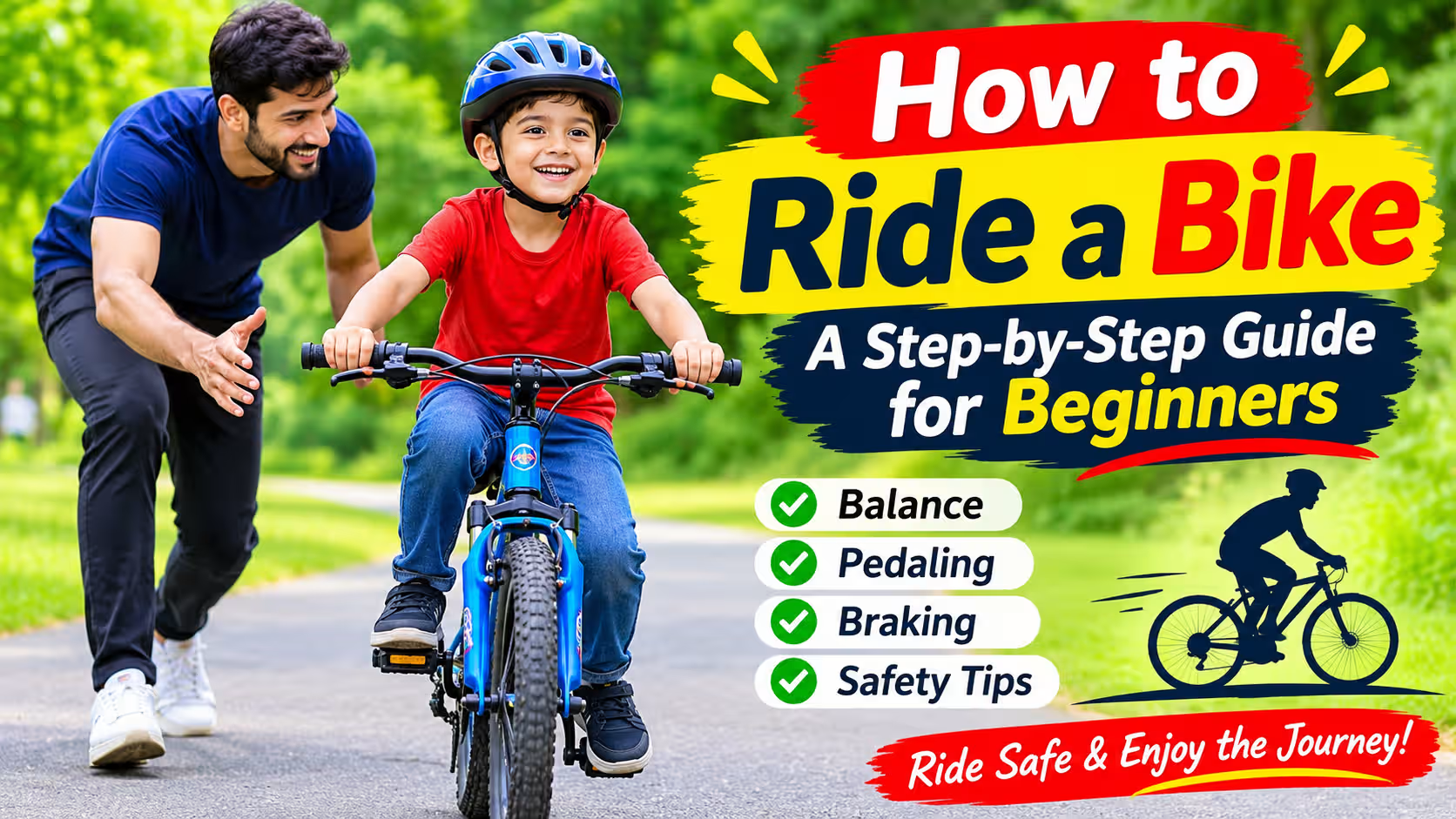
Learning how to ride a bike is one of life’s great milestones. It gives you freedom, exercise, and a fun way to get around. Whether you’re a parent figuring out how to teach a kid to ride a bike, or an adult who never learned, this guide covers everything you need.
Most people can learn to ride in a single afternoon with the right approach. Let’s get started.
What You Need Before You Start
Before you learn to ride a bike, get the basics right:
- A properly sized bike. When you sit on the seat, you should be able to put the balls of your feet on the ground. For beginners, being able to put both feet flat is even better.
- A helmet. Choose one that fits snugly, sits level on your forehead, and has the strap buckled. A helmet is the single most important piece of safety gear.
- Closed-toe shoes. Sneakers work well. Avoid sandals and loose laces.
- A safe practice area. An empty parking lot, a quiet park path, or a flat, grassy field is ideal.
Check the tires, brakes, and seat height before every ride.
How to Ride a Bike Step by Step
This simple method works for beginners of any age.
Step 1: Learn to Balance First
Balance is the hardest part of riding a bike, so practice it before pedaling. Lower the seat so both feet touch the ground. Sit on the bike and walk it forward using your feet. Once you’re comfortable, push off and lift your feet for a second or two to glide. Repeat until you can glide for several seconds.
Step 2: Practice Braking
Learn to stop before you go fast. Squeeze both brake levers gently and evenly. Practice stopping from a slow glide until it feels natural.
Step 3: Start Pedaling
Place one pedal at about the 2 o’clock position. Push down with that foot while you look ahead, not at your feet. Bring your other foot to the other pedal and keep pedaling smoothly. Don’t worry if you wobble at first, because it’s normal.
Step 4: Look Ahead and Steer Gently
Keep your eyes up and focus on where you want to go. Small, gentle movements on the handlebars work better than sharp turns.
Step 5: Practice Starting, Stopping, and Turning
Repeat the cycle of starting, pedaling, braking, and turning. Once you can do all four without putting a foot down, you’ve learned how to ride a bike.
How to Ride a Bike Without Training Wheels
Many kids start on training wheels, but they can delay learning to balance because the bike never leans. If you want to move to riding without training wheels:
- Remove the training wheels and lower the seat so the child’s feet touch the ground.
- Take off the pedals (optional). This turns the bike into a balance bike. Once the child can glide confidently, put the pedals back on.
- Practice on a gentle slope or flat surface, never near traffic.
- Let them practice gliding before adding pedaling.
Most kids go from training wheels to confident riding within a few days when the focus is on balance.
How to Teach a Kid How to Ride a Bike
Teaching a kid how to ride a bike takes patience and encouragement. These tips make it easier for both of you:
- Pick the right bike size. A bike that’s too big is hard to control and can be scary.
- Start with balance, not pedaling. Kids who learn to glide first usually pick up pedaling quickly.
- Choose a calm place. A flat, empty, paved area with no cars is best.
- Run alongside, but don’t hold the seat forever. Hold lightly at first, then let go briefly without telling them. You may be surprised how far they ride.
- Keep sessions short. Twenty to thirty minutes is plenty for young kids.
- Celebrate small wins. Praise effort, not just results.
- Always use a helmet, even for practice rides.
If you’re looking for how to ride a bike for kids in a fun way, turn it into a game, such as gliding to a cone or riding in a big circle.
Tips for Adults Learning How to Ride a Bike
It’s never too late to learn. Adults often pick it up quickly because they understand balance and coordination. The same steps apply: lower the seat, glide first, then pedal. Many adults find it helpful to take a beginner class, which many US cities and bike shops offer for free or at low cost.
How to Ride a Bike on the Road
Once you’re confident, you may want to ride on streets. Follow these safety rules:
- Ride with traffic, on the right side of the road, never against it.
- Obey all traffic signs and signals, just like a car.
- Use hand signals. Extend your left arm straight out to signal a left turn, and bend it upward (or extend your right arm) for a right turn. Point down with your left arm to signal stopping.
- Stay visible. Wear bright clothing, and use front and rear lights at dawn, dusk, and night.
- Use bike lanes and paths whenever possible.
- Watch for car doors, parked cars, and drivers turning.
- Stay alert. Avoid headphones and phone use while riding.
Rules vary by state and city, so check your local laws, especially on helmet requirements and riding on sidewalks.
How to Ride a Bike Faster
Once you’re comfortable, you may want more speed and efficiency. Try these tips:
- Use your gears. Shift to an easier gear on hills and a harder gear on flat ground, and aim to pedal smoothly at a steady pace.
- Keep a steady cadence. Pedaling at a consistent rhythm saves energy.
- Adjust your seat height. Your leg should be almost fully extended at the bottom of the pedal stroke.
- Lower your body position. Bending slightly forward reduces wind resistance.
- Keep your tires properly inflated. Soft tires slow you down.
- Build fitness gradually. Regular rides will naturally improve your speed and stamina.
How to Ride a Bike With No Hands
Riding with no hands looks impressive, but it’s an advanced skill and carries real risk. Only try it once you’re a confident rider.
- Practice in a flat, empty, open area with no traffic, and wear a helmet.
- Build up speed on a smooth surface. A steady, moderate speed helps the bike stay stable.
- Sit upright, relax your shoulders, and keep your eyes forward.
- Slowly lift one hand off the handlebars, then the other, for just a second.
- Steer by gently leaning your body, not by twisting the handlebars.
- Keep your hands near the brakes so you can grab them quickly.
Start with a brief moment and build up gradually. Never ride no-hands in traffic, in crowds, or on uneven ground.
Common Mistakes When Learning to Ride a Bike
- Looking down at the wheel or pedals instead of ahead
- Using a seat that’s too high
- Gripping the handlebars too tightly
- Braking too hard with only the front brake
- Practicing in an unsafe location
Frequently Asked Questions
How long does it take to learn how to ride a bike?
Many kids learn in a few hours to a few days. Adults often learn in one or two sessions.
What age should a child learn to ride a bike?
Most children are ready between ages 4 and 7, but readiness varies. Balance bikes can help toddlers start even earlier.
Is it better to learn with or without training wheels?
Many experts recommend learning to balance first, since training wheels don’t teach balance.
Do I need a helmet to ride a bike?
Helmets are strongly recommended for all riders, and some US states require them for children.
Final Thoughts
Learning how to ride a bike comes down to a few basics: balance, braking, pedaling, and looking ahead. Take it slowly, stay safe, and enjoy the process. Once you’ve mastered the fundamentals, you can try road riding, riding faster, and even more advanced skills.
Ready to start? Grab a helmet, find a quiet spot, and take your first glide today.
