
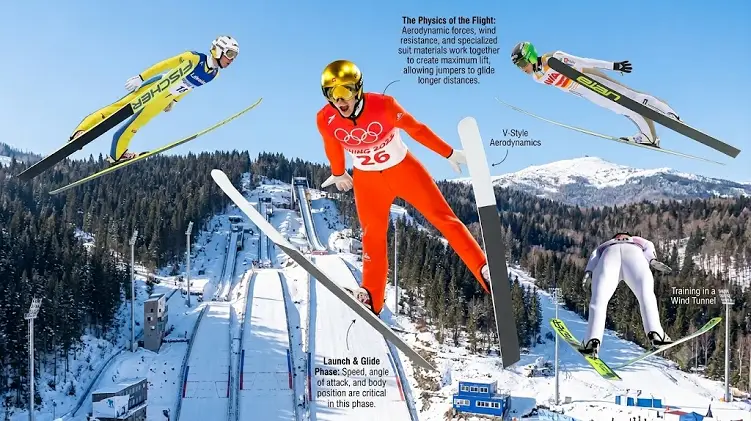
Ski jumping is one of the most breathtaking sports on Earth. Watching an athlete launch off a massive ramp and glide through the air for several seconds often leaves spectators wondering: how is it possible for ski jumpers to stay in the air so long and how do they train for that?
The answer combines physics, aerodynamics, athletic skill, mental discipline, and years of specialized training. Modern ski jumpers are not simply falling through the air—they are carefully controlling airflow around their bodies and equipment to maximize lift and minimize drag.
In this comprehensive guide, we’ll explore the science behind ski jumping flight, the techniques athletes use, and the intensive training methods that allow them to achieve remarkable distances.
Understanding the Basics of Ski Jumping Flight
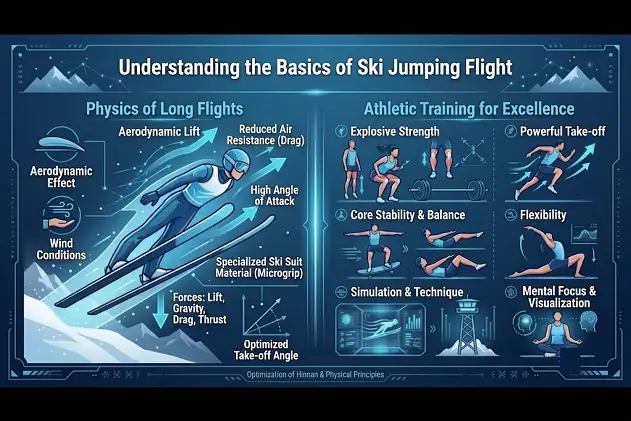
At first glance, ski jumping appears to defy gravity. However, the sport relies on scientific principles rather than magic.
When a skier races down the in-run, they build tremendous speed before reaching the takeoff table. At that moment, they transform their forward momentum into a controlled flight.
Several factors work together:
- Speed generated during descent
- Aerodynamic lift
- Proper body positioning
- Ski design
- Wind conditions
- Athlete technique
Instead of dropping immediately after takeoff, the jumper uses these elements to glide efficiently through the air.
Key Factors That Keep Ski Jumpers Airborne
| Factor | Role in Flight | Impact on Distance |
|---|---|---|
| Speed | Generates momentum | High |
| Aerodynamics | Creates lift | Very High |
| V-Style Ski Position | Maximizes airflow | Very High |
| Body Posture | Reduces drag | High |
| Wind Conditions | Assists lift | Medium to High |
| Equipment Design | Improves efficiency | Medium |
| Takeoff Technique | Optimizes launch | Very High |
| Physical Fitness | Supports execution | High |
| Mental Focus | Maintains precision | Medium |
| Training Experience | Refines all skills | Very High |
The Science of Aerodynamics in Ski Jumping
The biggest reason ski jumpers stay airborne is aerodynamics.
Aerodynamics is the study of how air moves around objects. During a jump, the athlete’s body and skis interact with airflow to create lift.
Lift is the upward force that partially counters gravity.
The jumper carefully positions their body so air flows smoothly beneath the skis and around their torso. This creates enough lift to slow their descent and extend their flight.
Without aerodynamic lift, ski jumpers would simply leap and fall quickly to the ground.
Modern ski jumping has become so scientific that teams use:
- Wind tunnel testing
- Motion analysis software
- High-speed cameras
- Biomechanical research
These tools help athletes find the most efficient flying position possible.
Read More : Tightrope Britannica – History, Techniques, Skills, and Safety Tips in 2026
Why the V-Style Technique Changed Everything
One of the greatest innovations in ski jumping history is the V-style.
Before the late twentieth century, jumpers kept their skis parallel during flight. While effective, this technique generated less lift.
Today, athletes spread the front tips of their skis outward, forming a “V.”
Benefits of the V-Style
- Larger surface area
- Increased aerodynamic lift
- Better flight stability
- Longer jump distances
- Improved control in changing wind conditions
This technique revolutionized the sport and remains the standard approach used by elite competitors worldwide.
How Takeoff Determines Flight Success
Every great jump begins with a great takeoff.
The takeoff occurs when the skier reaches the end of the ramp and explosively extends their legs.
Timing is critical.
If the jumper leaves too early or too late, they may lose valuable distance.
Elite athletes spend thousands of hours perfecting:
- Leg extension
- Balance
- Timing
- Body angle
- Coordination
A perfect takeoff creates the ideal launch trajectory and sets up a stable flight.
The Importance of Body Position in Mid-Air
Body position has a massive impact on flight performance.
Immediately after takeoff, ski jumpers lean forward aggressively.
Their goals are:
- Reduce drag
- Increase lift
- Maintain balance
- Preserve speed
Athletes keep their chest close to the skis while maintaining a streamlined shape.
Even tiny adjustments can affect jump distance by several meters.
Ideal Flight Position
| Body Part | Position |
| Head | Slightly forward |
| Arms | Close to body |
| Torso | Leaned forward |
| Hips | Elevated |
| Legs | Stable and aligned |
| Skis | Wide V formation |
Maintaining this posture requires incredible body awareness and flexibility.
How Wind Helps Ski Jumpers Stay in the Air
Wind can dramatically influence performance.
A favorable headwind increases lift and allows jumpers to remain airborne longer.
A tailwind, on the other hand, reduces lift and often shortens jumps.
Competition officials carefully monitor:
- Wind direction
- Wind speed
- Wind consistency
Modern events use compensation systems to ensure fairness when conditions change.
Athletes must also learn how to adjust their technique according to wind conditions during flight.
Physical Training Methods Used by Ski Jumpers
Many people assume ski jumpers focus only on skiing.
In reality, they follow demanding athletic training programs throughout the year.
Strength Training
- Squats
- Deadlifts
- Lunges
- Jump squats
- Box jumps
These exercises build explosive power for takeoff.
Core Training
A strong core helps maintain proper body position.
- Planks
- Russian twists
- Hanging leg raises
- Stability ball exercises
Balance Training
Balance is essential because athletes fly at high speeds while making subtle adjustments.
- Balance boards
- Single-leg exercises
- Stability platforms
Typical Weekly Training Schedule
| Day | Focus Area |
| Monday | Strength Training |
| Tuesday | Technical Jump Practice |
| Wednesday | Core & Balance Training |
| Thursday | Aerobic Conditioning |
| Friday | Jump Simulations |
| Saturday | On-Hill Practice |
| Sunday | Recovery & Mobility |
This combination develops power, precision, and endurance.
Summer Training Without Snow
One of the most surprising facts about ski jumping is that athletes train year-round.
Modern ski jumping facilities use synthetic landing surfaces that mimic snow.
This allows athletes to practice:
- Takeoffs
- Flight position
- Landing technique
- Timing
- Coordination
Benefits of summer training include:
- More repetitions
- Consistent skill development
- Faster technical improvements
- Better preparation for winter competitions
Many elite jumpers spend hundreds of hours training during the offseason.
Mental Training and Psychological Preparation
Physical ability alone is not enough.
Ski jumping requires tremendous mental strength.
Athletes must manage:
- Fear
- Pressure
- Competition stress
- High-speed decision-making
Common mental training methods include:
- Visualization
- Meditation
- Focus exercises
- Breathing techniques
- Sports psychology sessions
Many top performers mentally rehearse every phase of the jump before stepping onto the ramp.
This improves confidence and consistency.
Equipment Technology Behind Long Flights
Modern ski jumping equipment is highly specialized.
Every component is designed to optimize performance.
Essential Equipment
| Equipment | Purpose |
| Skis | Generate lift |
| Suit | Control airflow |
| Boots | Stability and support |
| Helmet | Safety |
| Bindings | Transfer force efficiently |
| Goggles | Visibility |
Strict regulations ensure fairness while allowing innovation.
Equipment improvements have contributed significantly to longer and safer jumps.
The Future of Ski Jumping Training in 2026 and Beyond
Technology continues to transform ski jumping.
New developments include:
- Artificial intelligence coaching
- Motion tracking systems
- Wearable performance sensors
- Virtual reality simulations
- Advanced aerodynamic modeling
These tools provide detailed feedback that helps athletes improve every aspect of their performance.
As sports science evolves, future jumpers may achieve even greater distances while maintaining safety.
(FAQs) About how is it possible for ski jumpers to stay in the air so long and how do they train for that?
How is it possible for ski jumpers to stay in the air so long?
Ski jumpers stay airborne because they use speed, aerodynamics, body positioning, and lift generated by their skis to slow their descent and extend flight time.
How fast do ski jumpers travel before takeoff?
Most elite ski jumpers reach speeds between 85 and 100 kilometers per hour before leaving the ramp.
Do ski jumpers actually fly?
They do not fly like airplanes, but they use aerodynamic lift to glide efficiently through the air.
How do ski jumpers train for flight?
They train through strength exercises, balance work, technical jump practice, summer hill training, and mental preparation.
Why do ski jumpers use a V-shape with their skis?
The V-style creates more lift and improves aerodynamic efficiency, allowing longer jumps.
Is ski jumping dangerous?
While risks exist, modern equipment, safety standards, hill design, and training methods have made the sport significantly safer.
Final Thought of how is it possible for ski jumpers to stay in the air so long and how do they train for that?
So, how is it possible for ski jumpers to stay in the air so long and how do they train for that? The answer lies in a remarkable combination of science and athletic excellence. By mastering aerodynamics, perfecting takeoff technique, maintaining ideal body positioning, and following rigorous year-round training programs, ski jumpers can achieve extraordinary flights that seem almost impossible.
As technology and sports science continue to evolve, ski jumping will remain one of the most impressive demonstrations of human skill, precision, and courage. Whether you’re a sports fan, athlete, or simply curious about winter sports, understanding the mechanics behind these incredible flights makes watching ski jumping even more fascinating.
